SOTW 02.10.26
REC-Mrs McGee-Avaiah
REC-Mrs Brannon-Seren
Y1-Miss Robinson-TBC
Y1-Mrs Smith/Mr Harris-Amelia
Y2-Mrs Longmore-Leland
Y2-Miss Roberts-Grace
Y3-Ms Weston-Stanley
Y3-Mrs Cottrell-McKenzie
Y4-Miss Rowlands-Delilah
Y4-Mrs Penfold-TBC
Y5-Mr Pilling-Mila Grace
Y5-Mr White-Husna
Y6-Mrs Doughty-Sapphire
Y6-Miss Saville-Kayleb
I love my Grandad
This week we read the story ‘I love my Grandad’. We talked about members of our wider family and the things we like to do together.
We drew pictures using our family photos, printed our houses using shapes and collected natural resources to create faces.
We also had a go at making our own sandwiches for snack like in the story.
Y2 Germs! Germs! Germs!
In Science we have been learning all about hygiene. We found out that germs are so tiny that we can’t see them with our eyes. The French Scientist Louis Pasteur discovered that germs travel from person to person through touch. To test this out, we covered our hands in germs (herbs) and saw how quickly they spread when we touched someone else or an object. It was messy and super fun!
Classification Year 6
Today, Year 6 continued their learning about classification by putting their classification key skills to the test!
We began with a rather tasty-looking challenge: Dolly Mixtures! 🍬 The children carefully observed the different characteristics of the sweets, considering features such as shape, colour and layers, before using these differences to create and follow classification keys.
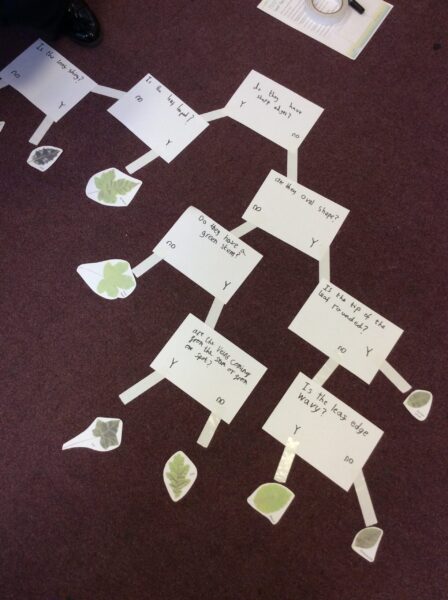
We then transferred these skills to the natural world, examining a variety of leaves. 🍃 The children looked closely at features including shape, edges, veins and structure to identify similarities and differences and classify them accurately.
This practical lesson built on our previous learning about invertebrates and vertebrates and the different groups within the animal kingdom. We are now extending our classification knowledge further as we explore plants and microorganisms, thinking about how scientists use observable characteristics to organise and identify living things.
A brilliant day of observing, questioning, comparing and classifying! 🔍🌱
Week 4 ‘My Dad’
This week in Preschool, the children have been enjoying lots of exciting learning opportunities inspired by our focus story, “My Dad.”
The children explored a special tuff tray activity where they pretended to be builders and handy helpers just like Dad. They used tools, measured different objects and enjoyed constructing a variety of creations, developing their early mathematical thinking and problem-solving skills.
We also created a fantastic Numicon City, where the children practised their counting and one-to-one correspondence skills. They carefully matched quantities to Numicon pieces and worked together to build houses, roads and towers.
In the water tray, the children enjoyed making cups of tea for one another, sharing conversations about their own family customs and daily routines. This encouraged language development, imagination and an understanding of the world around them.
The children kept active by using the agility mat, developing their balance, coordination and confidence in movement as they carefully followed different pathways and challenges.
Outside, the children worked collaboratively to use the large wooden blocks to build a house. This activity strengthened their gross motor skills, teamwork and communication as they planned and constructed their designs together.
The children also continued developing their mathematical understanding in the sand area, where they practised their counting and sorting skills using the counting bears. They enjoyed grouping the bears by colour, counting how many were in each set and comparing quantities.
It has been wonderful to see the children so engaged in their learning this week, making connections between our story and their own experiences while developing a wide range of skills through play. We are very proud of all their hard work and enthusiasm! 🌟
Classification Year 6
As part of our learning about living things and their habitats, the children recapped their previous knowledge of vertebrates and invertebrates, remembering that vertebrates have a backbone while invertebrates do not.
We then revisited the five main groups of vertebrates: mammals, birds, fish, reptiles and amphibians. The children discussed the key characteristics of each group before completing a hands-on classification activity. Working together, they examined different animals, considered their features and sorted them into the correct groups.
There was lots of brilliant scientific discussion as the children explained their choices and used key vocabulary to justify how they had classified each animal.
A fantastic recap of previous learning and a great start to our Year 6 classification work! 🐸🐍🐟🦅🐯
Year 6 Maths Challenge
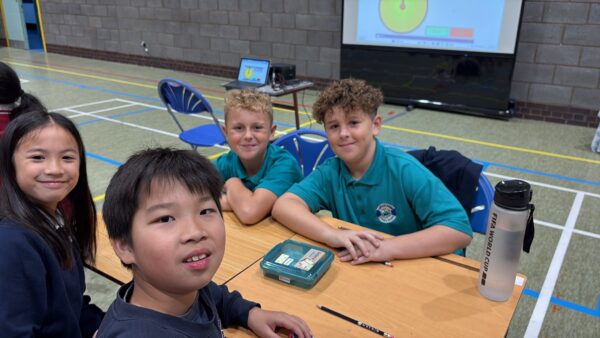
Some of our amazing Year 6 mathematicians took part in the Wrekin College Maths Challenge on Friday – and we are proud to announce they came 4th!! Well done 😊